
Lumube
Innovation, tracked.
Our Perspective
Why we think about innovation the way we do, and what that means for how Lumube works.
Most organisations treat innovation as something that happens at specific moments. A workshop. A hackathon. An off-site. These events can be energising, but they share a structural weakness: they produce ideas without producing infrastructure to carry those ideas forward.
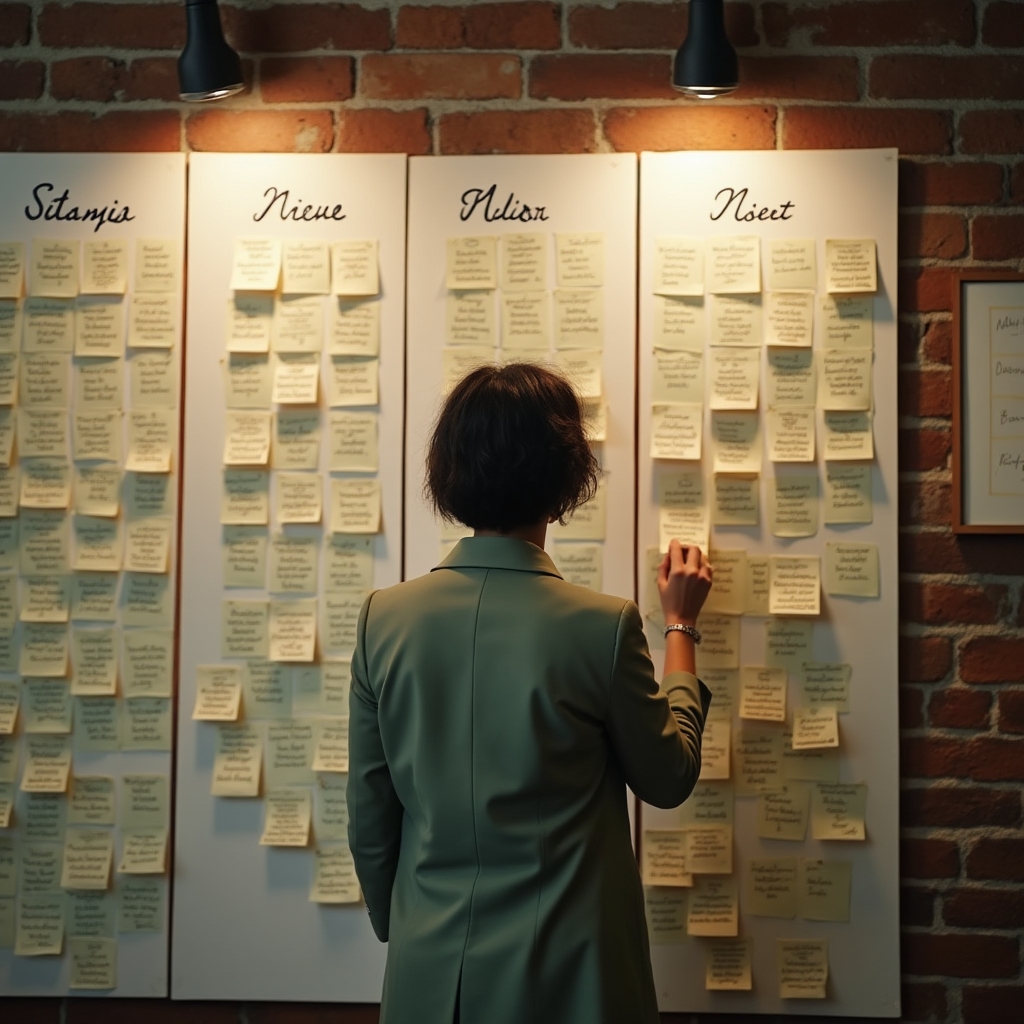
The sticky notes come back from the off-site. They go on a wall. Someone photographs the wall. The photograph gets saved somewhere. Three months later, nobody can remember the rationale behind any of it, and the ideas that seemed exciting on a Friday afternoon look vague and unactionable on a Tuesday morning.
This is not a motivation problem. It is a systems problem. The organisation invested in generating ideas but not in processing them.
Sustainable innovation requires four things that most teams do not have in one place. A consistent way to capture ideas as they arise. A process for evaluating which ideas deserve resources. A tracking system that makes prototype progress visible. And a way to measure outcomes honestly at the end.
None of these are technically difficult. The difficulty is that they are usually spread across different tools, different people, and different moments in time. There is no single thread connecting an idea submitted in January to an outcome recorded in September.
Lumube is that thread. It does not replace the creativity of your team. It gives that creativity somewhere to go.
There is a common assumption in enterprise software that tools for managing complex processes need to be complex themselves. The result is platforms that require training, onboarding, and ongoing support. The people who would benefit most from the tool end up excluded because the barrier to entry is too high.
We designed Lumube around a different assumption. The people with the most relevant ideas are often not the most technical members of the team. A logistics coordinator who has noticed a recurring inefficiency. A customer service representative who hears the same complaint every week. A finance analyst who has spotted a pattern in the numbers.
If your innovation platform requires technical fluency, you are filtering out exactly the people whose ideas you need.
Organisations that track innovation projects but not innovation outcomes end up with a very incomplete picture. They know how many ideas were submitted. They know how many prototypes were built. What they do not know is whether any of it made a difference.
Outcome measurement is the part of the innovation cycle that most platforms skip. It is also the part that enables learning. When you can look back at a completed project and see what the original hypothesis was, what was actually built, and what the result was, you start to develop institutional knowledge about how innovation works in your specific context.
That knowledge compounds. Teams that learn from past projects make better decisions about future ones. Lumube keeps that record.